
The Distributed Dilemma: Understanding the CAP Theorem
Imagine you're running a global bookstore. You have servers in New York, London, and Tokyo. When someone buys the last copy of a rare book in Tokyo, the servers in New York and London need to know immediately so they don't sell it again.
But what happens if the network between Tokyo and London breaks? This is the fundamental challenge of distributed systems, and it's perfectly summarized by the CAP Theorem.
What is the CAP Theorem?
Proposed by Eric Brewer in 2000, the CAP theorem states that a distributed data store can only provide two of the following three guarantees:
1. Consistency (C)
Every read receives the most recent write or an error. In our bookstore, this means if I update a price in Tokyo, a user in London sees that new price the very next millisecond.
2. Availability (A)
Every request receives a (non-error) response, without the guarantee that it contains the most recent write. In other words, the system is always "up," even if some data is slightly stale.
3. Partition Tolerance (P)
The system continues to operate despite an arbitrary number of messages being dropped (or delayed) by the network between nodes. In the real world, network failures are inevitable—so Partition Tolerance is a must.
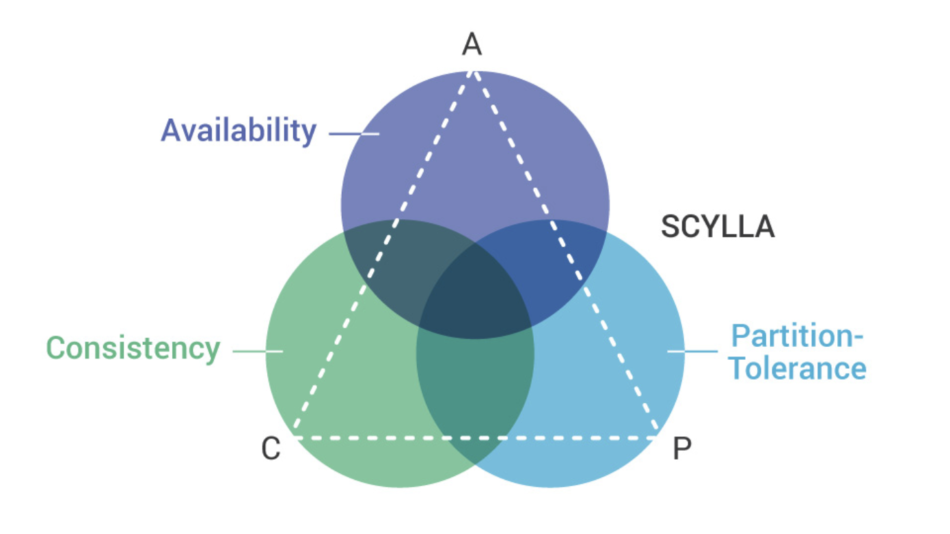
The "Pick Two" Law
In a perfect world with a 100% reliable network, you could have all three. But since networks will fail (a "network partition"), you are forced to choose:
Case 1: The ATM (Consistency - CP)
When you go to an ATM to withdraw money, the system must be Consistent. If the ATM cannot reach the main bank server to verify your balance due to a network error, it won't just guess. It will say "Out of Service."
- Tradeoff: It chooses Consistency (preventing double spending) over Availability (serving the customer).
Case 2: Social Media Feeds (Availability - AP)
When you "like" a post on Instagram or X, the system needs to be Available. Even if there's a minor network glitch, the app will show your "like" immediately. It might take a few seconds for that like to sync across the globe, but the app keeps working.
- Tradeoff: It chooses Availability (keeping the UI responsive) over Immediate Consistency.
Which One Should You Choose?
The choice depends entirely on your use case:
| Use Case | Recommended | Examples |
|---|---|---|
| Financial Systems | CP (Consistency) | SQL Databases (Postgres, MySQL), MongoDB (usually) |
| Social Media / Discovery | AP (Availability) | Cassandra, DynamoDB, CouchDB |
| Inventory Management | CP (Consistency) | To avoid overselling stock |
| Real-time Analytics | AP (Availability) | To keep ingestion fast |
The Modern Reality: PACELC
The CAP theorem is a great starting point, but modern systems often use Eventual Consistency.
The PACELC theorem extends CAP by saying: In case of a Partition (P), choose between Availability (A) and Consistency (C); Else (E), choose between Latency (L) and Consistency (C).
Essentially, even when the network is fine, we still trade a bit of consistency for better performance (lower latency).
Conclusion
There is no "perfect" database or architecture. Every decision is a tradeoff. As a Senior Software Engineer, your job isn't to find the "best" tool, but the most appropriate tool for the specific constraints of your project.
Are you building a bank or a blog? The answer to that question will tell you exactly where you sit on the CAP triangle.