
S.O.L.I.D Principles: The Foundation of Clean Code
Building software is easy. Building software that can change, scale, and be maintained by a team over years is hard.
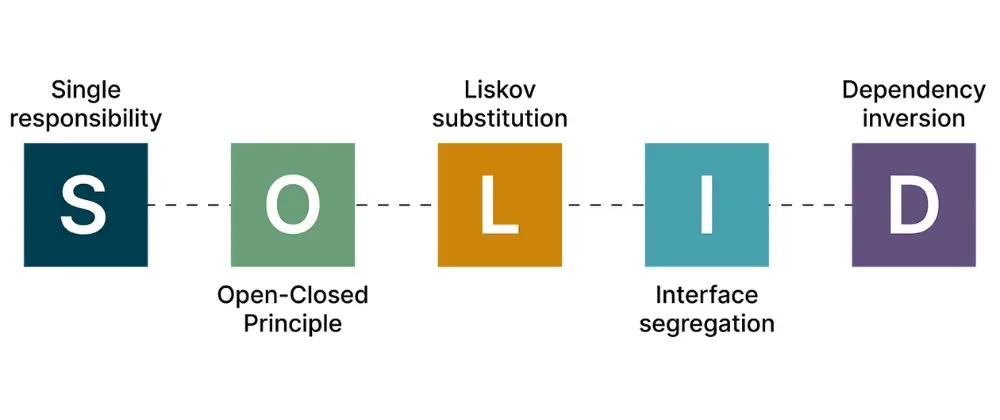
In the early 2000s, Robert C. Martin (Uncle Bob) introduced five design principles that have since become the bedrock of professional software development. Collectively known as SOLID, these principles help developers avoid "code rot" and build systems that are flexible and robust.
🏗️ What is SOLID?
SOLID is an acronym for five design principles intended to make software designs more understandable, flexible, and maintainable.
1. Single Responsibility Principle (SRP)
"A class should have one, and only one, reason to change."
This is the most misunderstood principle. It doesn't mean a function should only do one thing; it means a module should be responsible to one, and only one, actor.
If you have a User class that handles database persistence, email notifications, and password hashing, you're violating SRP. If the database schema changes, the class changes. If the email provider changes, the class changes.
Solution: Split these into UserRepository, EmailService, and PasswordHasher.
2. Open-Closed Principle (OCP)
"Software entities should be open for extension, but closed for modification."
You should be able to add new functionality without changing existing code. This is usually achieved using interfaces or abstract classes.
Instead of a giant switch statement that checks user roles to calculate discounts, create a DiscountStrategy interface. When you need a new discount type, you create a new class that implements the interface. You never touch the core calculation logic again.
3. Liskov Substitution Principle (LSP)
"Objects of a superclass should be replaceable with objects of its subclasses without breaking the application."
If you have a Bird class with a fly() method, and you create a Penguin subclass, you have a problem. A Penguin is a Bird, but it can't fly. Throwing a NotImplementedError in Penguin.fly() violates LSP because code expecting a Bird will break when it meets a Penguin.
Key takeaway: Subtypes must honor the contract of their base types.
4. Interface Segregation Principle (ISP)
"Clients should not be forced to depend upon interfaces that they do not use."
It's better to have many small, specific interfaces than one large, general-purpose one.
If you have an IMachine interface with print(), scan(), and fax(), a simple printer that can't scan is forced to implement a scan() method it doesn't need.
Solution: Split it into IPrinter, IScanner, and IFax.
5. Dependency Inversion Principle (DIP)
"Depend upon abstractions, not concretions."
High-level modules should not depend on low-level modules. Both should depend on abstractions.
Instead of your OrderService creating a new SqlConnection directly, pass an IDatabase interface to the constructor. This allows you to swap a SQL database for a MongoDB instance without changing a single line of your business logic. This is also the foundation of Dependency Injection.
💡 Why It Matters
Following SOLID isn't about dogmatism; it's about reducing the cost of change.
In a SOLID codebase:
- Testing is easier because components are decoupled.
- Debugging is faster because responsibilities are clear.
- New Features are added by adding code, not rewriting it.
Conclusion
Mastering SOLID takes time and practice. You'll often find yourself in situations where these principles conflict with "getting things done." The secret is to use them as a compass, not a cage.
Start small: next time you find a class that does too much, try to apply SRP. Your future self (and your teammates) will thank you.